

Marsh Harrier Wing Tagging Research Project
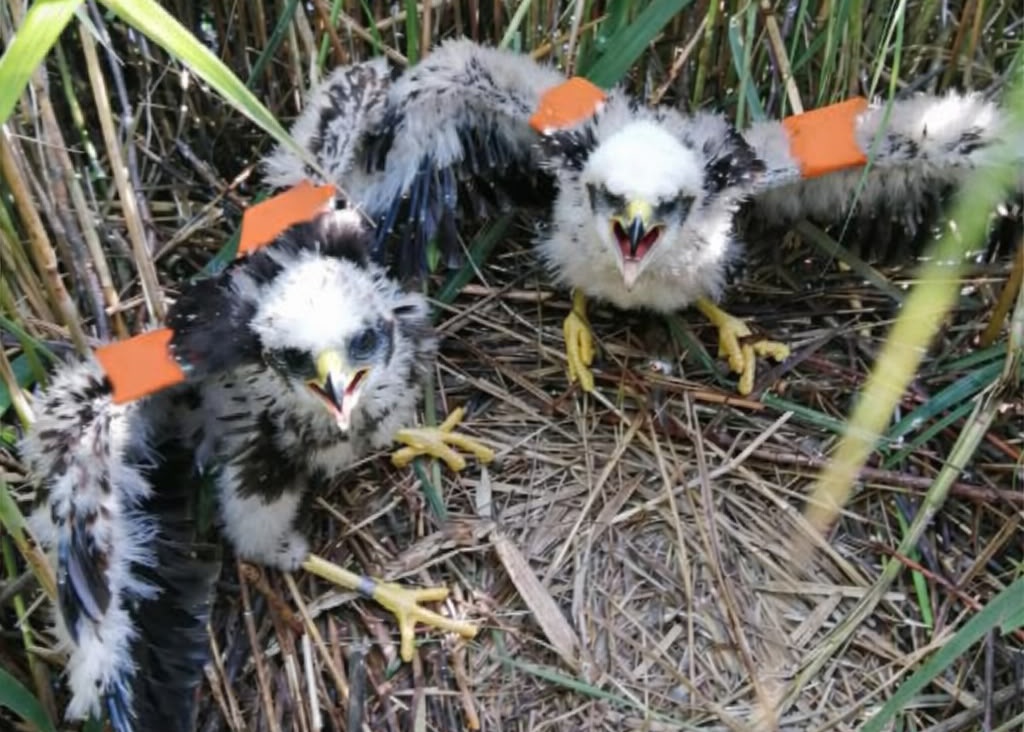
Since 2011, the Marsh Harrier Wing Tagging Research Project has been helping researchers better understand the movements, behaviour and breeding patterns of one of our most impressive birds of prey.
Through a long-term wing tagging programme, a dedicated team has been gathering valuable information about where Marsh Harriers travel, how young birds disperse, and how they choose future breeding sites. The Hawk and Owl Trust is pleased to support this important project, with any sightings received by the Trust passed on to the project coordinator.
Understanding Marsh Harrier Movements
The research project focuses on three key questions:
- How do young Marsh Harriers disperse from the places where they were born?
- Do they return to, or remain connected with, their natal areas when they are ready to breed?
- Do they choose familiar habitat types when establishing their own nesting sites?
By answering these questions, the project is helping to reveal more about the life cycles of Marsh Harriers and the landscapes they rely on.
How the Tagging System Has Developed
Over the course of the project, the wing tagging system has evolved to improve visibility and reporting accuracy.
The team initially used green tags with white coding. Following field observations and feedback, this was changed to black coding to make the tags easier to read. The project later moved to orange tags and now uses yellow tags with black coding.
These changes reflect the project’s ongoing commitment to improving research methods and collecting the best possible data.
A Strong Record of Success
The results so far show the value of this long-running research.
To date, 978 Marsh Harriers have been wing tagged, with 394 birds reported back to the research team. This represents a recovery rate of 40.29%, providing a significant body of information about the movements and behaviour of these remarkable birds.
Each report adds another piece to the puzzle, helping researchers understand how Marsh Harriers use different areas and how their populations move across the landscape.
Looking Ahead
The project is now introducing an enhanced reporting system to improve data collection even further. This will allow the research team to build a more detailed picture of Marsh Harrier populations, their movements and their habitat choices across different regions.
As the project continues, the information gathered will contribute to conservation knowledge and help inform future protection strategies for Marsh Harriers and other raptors.
Get Involved
Reports from the public, birdwatchers and field observers play an important role in the success of the project. Every sighting helps improve our understanding of Marsh Harriers and supports ongoing conservation work.
The Hawk and Owl Trust welcomes sightings of tagged Marsh Harriers. Any reports received will be passed on to the project coordinator to support the ongoing research.
Stay connected with the project for future updates, findings and insights into the lives of these fascinating birds of prey.
To report a sighting [REPORT]