

The History of Bath – St John’s Peregrines
The story of the Bath – St John’s Peregrines is one of resilience, conservation success, and the growing bond between wildlife and urban life. The Peregrine Falcon — the fastest bird in the world — suffered severe declines across the UK in the mid-20th century due to pesticide poisoning, habitat loss, and persecution. By the 1990s, thanks to legal protection and conservation efforts, peregrines were beginning a remarkable recovery.
From Rural Cliffs to Urban Towers
Historically, peregrines nested on cliff faces throughout Somerset and the Avon Valley. As natural habitats declined and urban landscapes expanded, the birds adapted. Tall buildings, church towers, and historic landmarks offered safe, elevated nesting sites that closely resemble their natural cliff ledges.
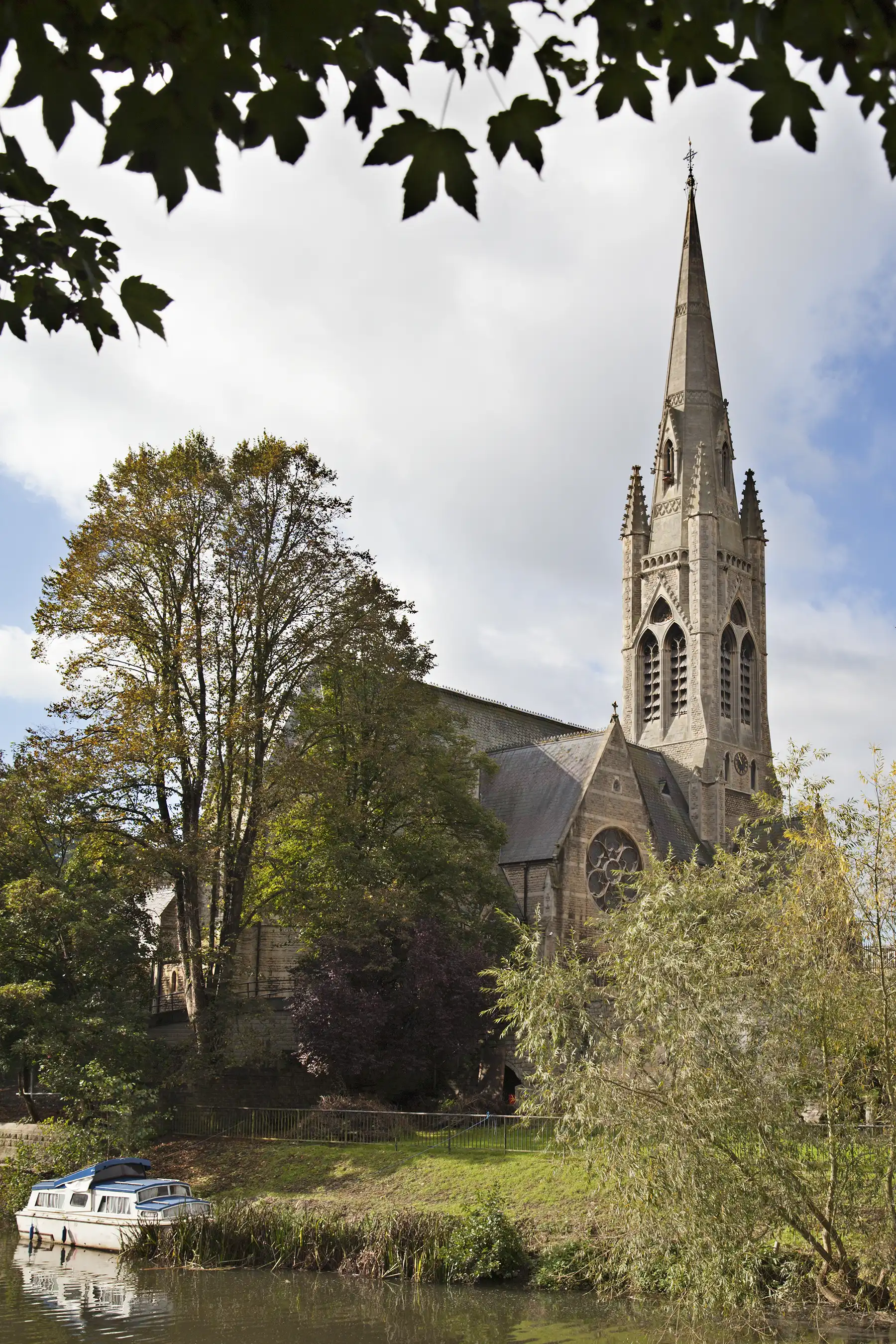
Peregrines were first regularly observed in Bath around 1998. After several years of residence without confirmed breeding, a major step forward came in 2005 when a nest platform was installed on the east side of the tower at St John’s RC Church in South Parade — one of the birds’ preferred roosting sites. The following year, the pair bred successfully for the first time. They have raised young at the site every year since.
Monitoring, Ringing and Conservation
Local conservationists initially monitored the birds using a small camera positioned above the nest and through ground observations. In 2014, with funding from the Hawk & Owl Trust, a high-quality live-streaming wildlife camera was installed, allowing viewers around the world to follow courtship, egg-laying, feeding, and fledging in real time.
Under licence from Natural England and in partnership with the British Trust for Ornithology, chicks (eyasses) are ringed at around 19–21 days old. Each bird receives a blue identification ring marked with two unique letters, enabling long-term tracking and research primarily across Avon, Wiltshire, and Somerset, and much wider as was revealed by a dispersion study and paper [2020]. Closer to home, one Bath fledged falcon [2013’s GA] travelled to and became the resident breeding falcon at Norwich Cathedral.
The first bird ringed under the project in 2007 (blue ring AA) later became the resident breeding male (tiercel) from 2009 until 2021. He was succeeded by the current unringed male, known as T-21. The present breeding female arrived in 2014 and is referred to as F-14.
A Strong Breeding Record
Since their first successful nesting in 2006, the Bath peregrines have produced a consistent and impressive breeding record, fledging dozens of young over nearly two decades. Annual clutches typically consist of three to four eggs, with high fledging success rates — a testament to careful management, suitable habitat, and minimal disturbance.
Bath’s urban environment provides abundant prey, particularly pigeons and small birds, while the surrounding countryside offers additional hunting territory. This combination has helped establish a stable and sustainable breeding site in the heart of the city.
A Symbol of Urban Wildlife Success
Today, the Bath – St John’s Peregrines are a celebrated feature of city life. They attract birdwatchers, photographers, and wildlife enthusiasts, while the live webcam continues to inspire thousands of viewers each year. Their continued presence demonstrates how historic cities can support thriving wildlife populations when communities work together to protect them.
From near extinction to annual breeding success above a busy city centre, the Bath peregrines stand as a powerful example of conservation in action — and of how wildlife and people can successfully coexist.