

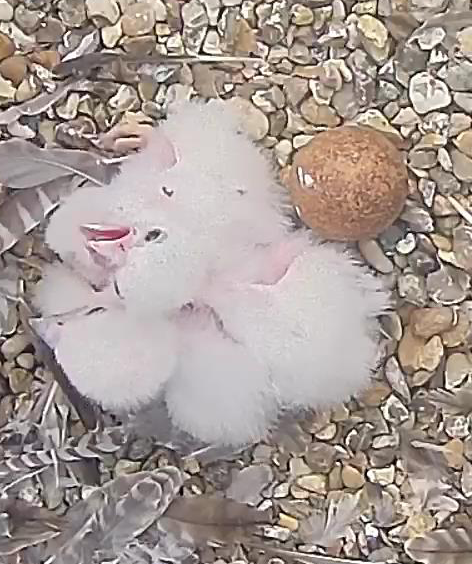
Peregrine falcons, like all birds, reproduce by laying eggs. Each spring, a pair of Peregrines usually returns to a nesting ledge, cliff, tall building, or specially provided nest tray. The female lays a clutch of eggs, often three or four, and both adults help incubate them. After about a month, most fertile eggs hatch into chicks called eyases.
However, it is not unusual for one egg in a Peregrines (or any other species) clutch to fail to hatch. This can happen for several natural reasons, and it does not always mean the parents have done anything wrong.
Why Peregrines lay eggs
Peregrines lay eggs because like all birds they develop their young outside the mother’s body. The egg contains everything the growing chick needs at first: the yolk provides food, the albumen protects and cushions the embryo, and the shell allows gas exchange while keeping the chick safe.
A female Peregrine usually lays one egg every couple of days until the clutch is complete. The parents then keep the eggs warm by incubation. The correct warmth is essential because the embryo inside the egg can only develop properly within a fairly narrow temperature range. She will usually start to incubate the eggs after the third egg. This is why sometimes there will be a smaller chick because it is later to hatch.
The eggs are also laid close together in time so that the chicks hatch within a few days of one another. This gives the young birds a better chance of growing together, being fed by both parents, and fledging successfully.
Why one egg may fail to hatch
There are several reasons why a Peregrine egg may not hatch.
1. The egg may not have been fertilised
Sometimes an egg is infertile. This means no embryo ever began developing inside it. Infertility can happen if mating was unsuccessful, if one bird is very young or old, or if there is a temporary problem with the male or female’s breeding condition.
An infertile egg will look normal from the outside, so the adults continue incubating it.
2. The embryo may die during development
Even if an egg is fertile, the chick inside may stop developing. This is called embryo mortality. It can happen because of genetic problems, poor egg quality, infection, or a weakness in the developing chick.
In many cases, there is no obvious sign from outside the egg. The adults may keep sitting on it long after the other chicks have hatched.
3. The egg may become too cold or too hot
Peregrine eggs need steady warmth. If an egg is left uncovered for too long in cold weather, the embryo may die. Extreme heat can also be dangerous, especially on exposed ledges or rooftops.
This can happen if the adults are disturbed, inexperienced, forced away by another bird, or affected by severe weather. This season has been particularly cold at the wrong time for good breeding.
4. The shell may be damaged
A cracked or damaged shell can allow bacteria to enter or moisture to escape. Even a small crack can prevent the chick from developing properly.
Eggs can be damaged by rough nest surfaces, rolling, fighting with intruding birds, bad weather, or accidental contact by the adults.
5. Pollution or toxins can affect egg development
Historically, pesticides such as DDT caused serious problems for Peregrines by thinning eggshells. This led to widespread breeding failure in many countries. Although DDT is now banned in many places, pollution, contaminants, or poisons in the food chain can still sometimes affect birds of prey.
6. The parents may be inexperienced
Young Peregrines do not always get breeding right in their first season. They may fail to incubate consistently, accidentally damage eggs, or choose a poor nest site. Breeding success often improves as the birds gain experience.
7. The chick may be unable to break out
Sometimes a chick develops almost fully but cannot hatch. It may be too weak, wrongly positioned inside the egg, or unable to chip through the shell. This is sad but natural, and it can occur even when the parents have incubated the egg properly.
Is one failed egg unusual?
No. In wild birds, it is quite common for not every egg to hatch. Peregrines often lay several eggs partly because nature allows for some losses. If three eggs hatch from a clutch of four, that can still be a successful breeding attempt.
A failed egg is usually left in the nest for a while. The parents may continue to incubate it, especially while caring for the chicks that have hatched. Eventually, the egg may be pushed aside, broken, buried in nest material, or removed by natural processes.
Conclusion
Peregrines lay eggs as part of their natural breeding cycle, giving each chick a protected place to begin life. But hatching is a delicate process. One egg may fail because it was infertile, the embryo died, the temperature was wrong, the shell was damaged, toxins affected development, the parents were inexperienced, or the chick could not break out.
A single unhatched egg is usually part of normal wild breeding. What matters most is whether the adult Peregrines continue to care for the chicks that do hatch, giving them the best chance of growing strong and eventually taking their first flight.